
Back

Optum

Designed UI and high-fidelity prototypes for an AI/ML-driven patient screening system, improving usability and efficiency outcomes. Reported impact included higher SUS scores, increased task success, and reduced time-on-task.

  • Strategy

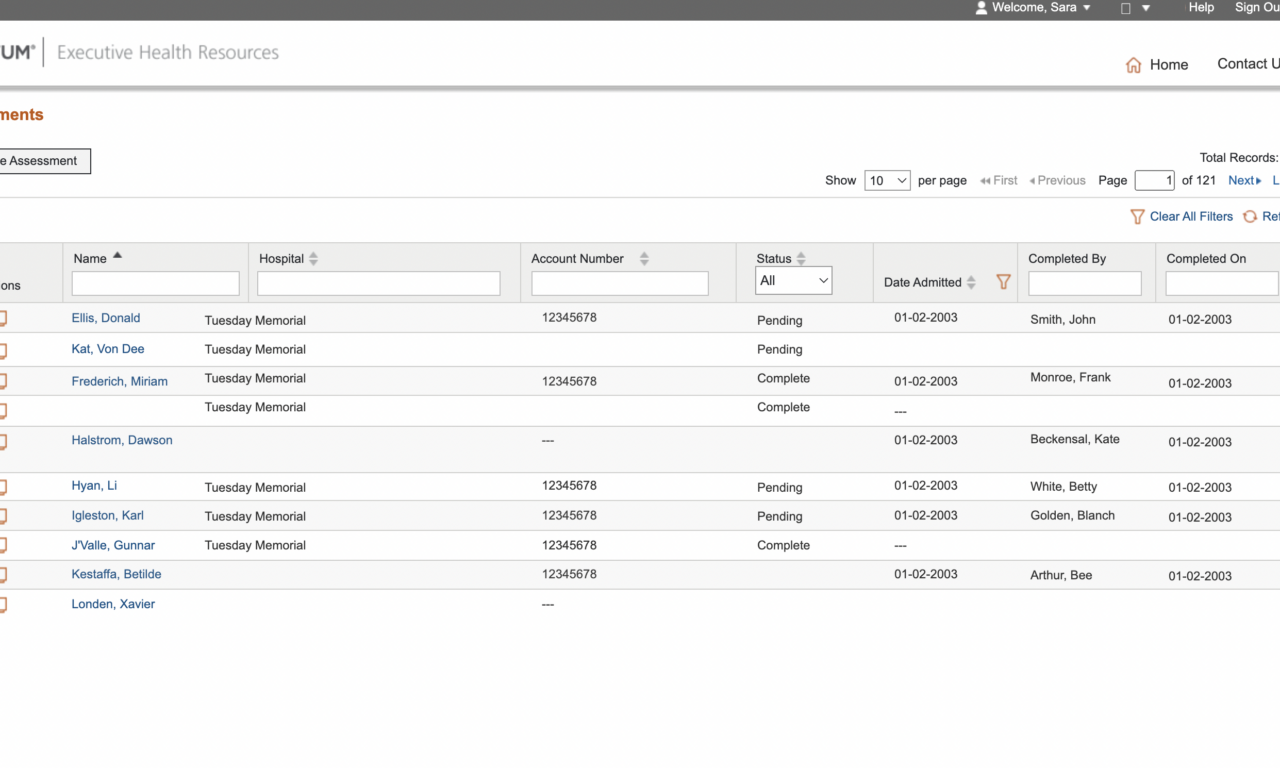
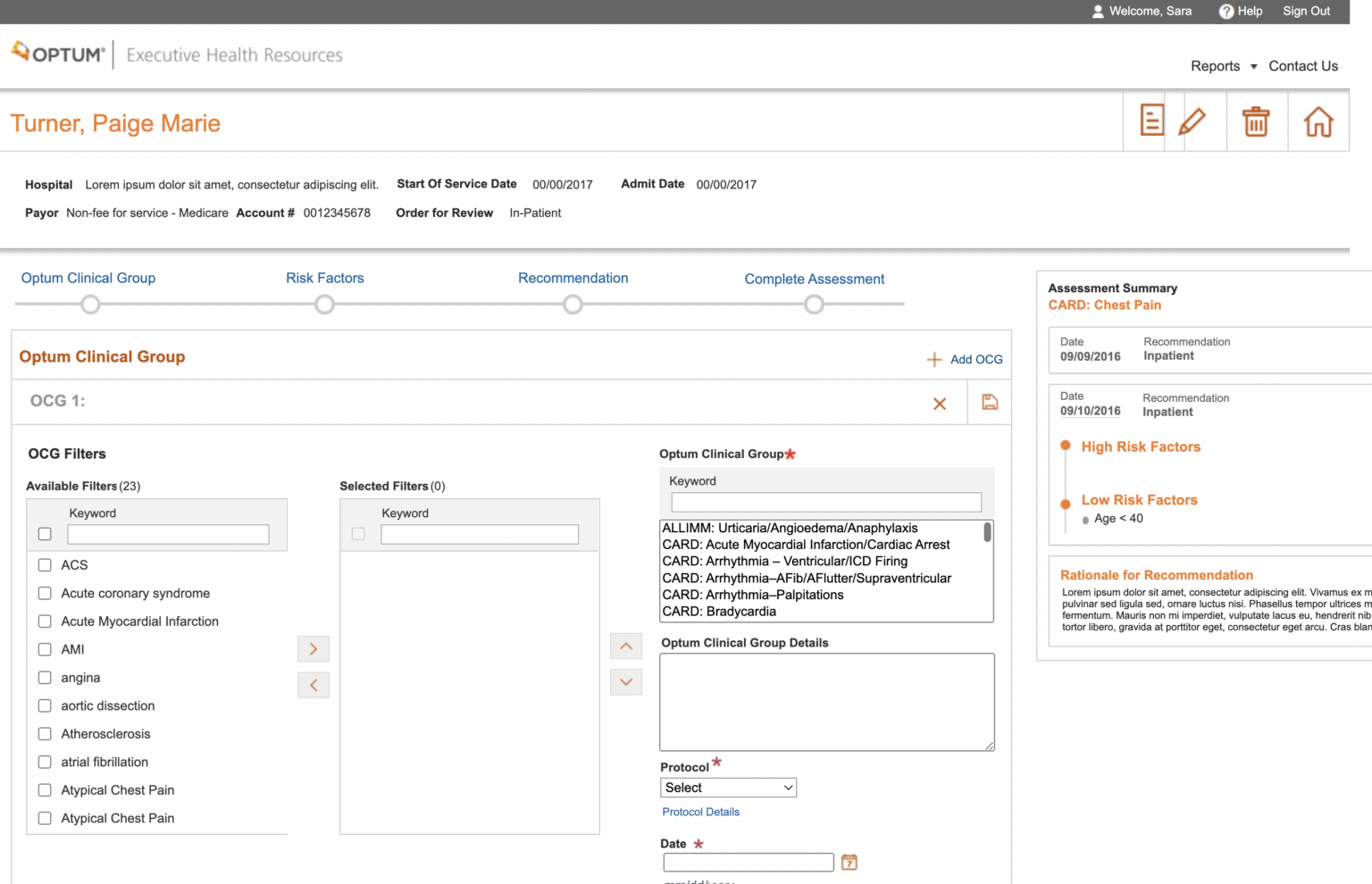
    Optum’s product focus here is an AI/ML-assisted patient screening workflow that improves clinical review efficiency and consistency by standardizing assessments, surfacing risk factors, and guiding users to a recommendation and completion step. The success metrics called out—higher usability (SUS), higher task success, and reduced time-on-task—signal a strategy aimed at measurable operational gains for clinical teams, reducing friction in high-volume review queues while preserving auditability and repeatability.

  • Design

    The design supports a “list-to-decision” flow: users start in a scalable, filterable table of assessments (with paging, column filters, and status controls) that’s optimized for throughput and queue management. The assessment detail view uses a stepper-style progression (risk factors → recommendation → complete) and a split layout that keeps the working checklist/protocol on the left while summarizing key outputs (risk highlights, recommendation, rationale, and completion metadata) on the right—balancing speed, clarity, and documentation in a clinical context.

  • Client

    UnitedHealth Group/Optum

Leave a Reply

Your email address will not be published. Required fields are marked *